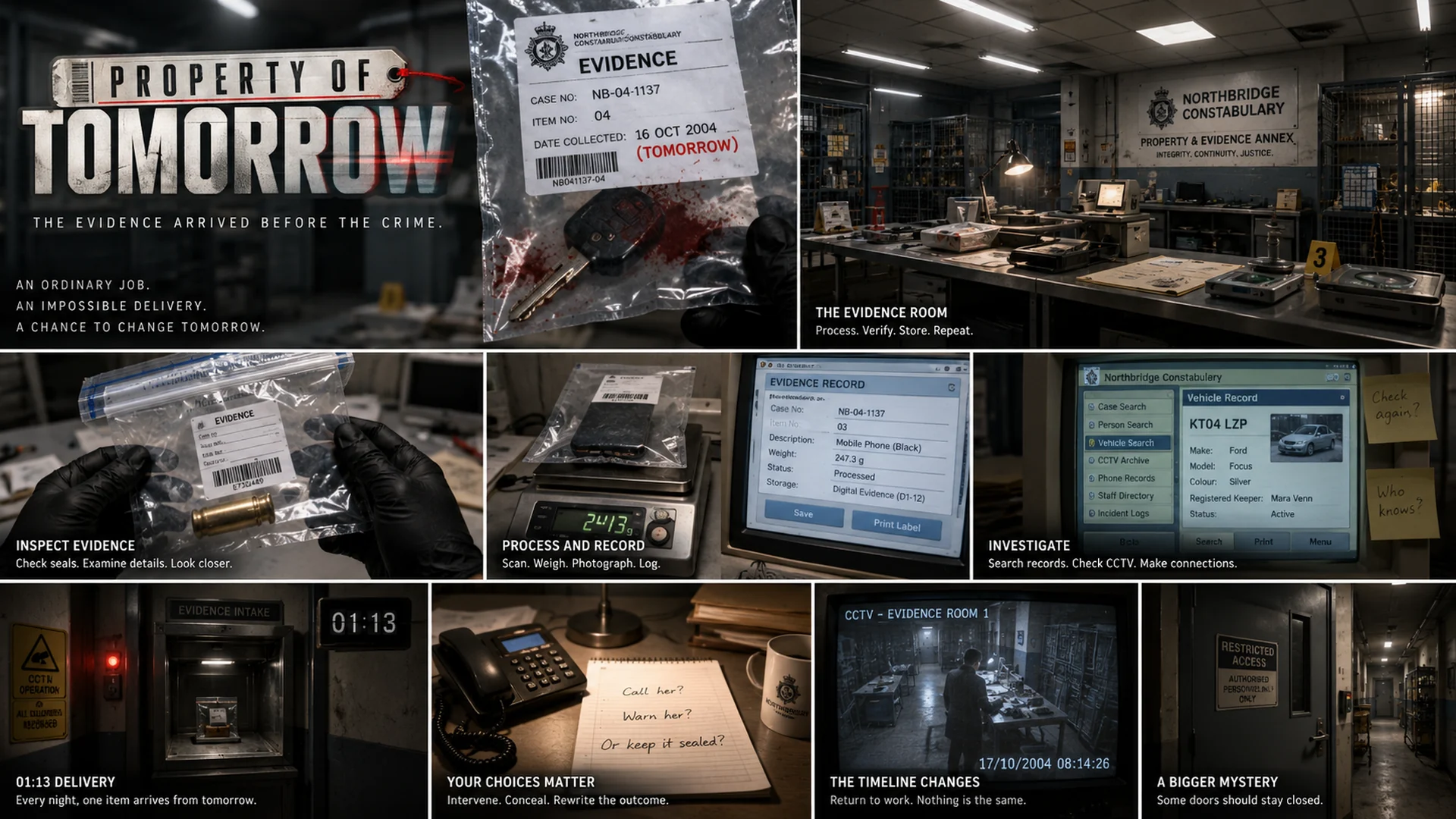
You work alone in a British police evidence annex. Each night, a sealed object arrives from exactly 24 hours in the future. Process it, investigate it or interfere—and watch the crime that created it change.
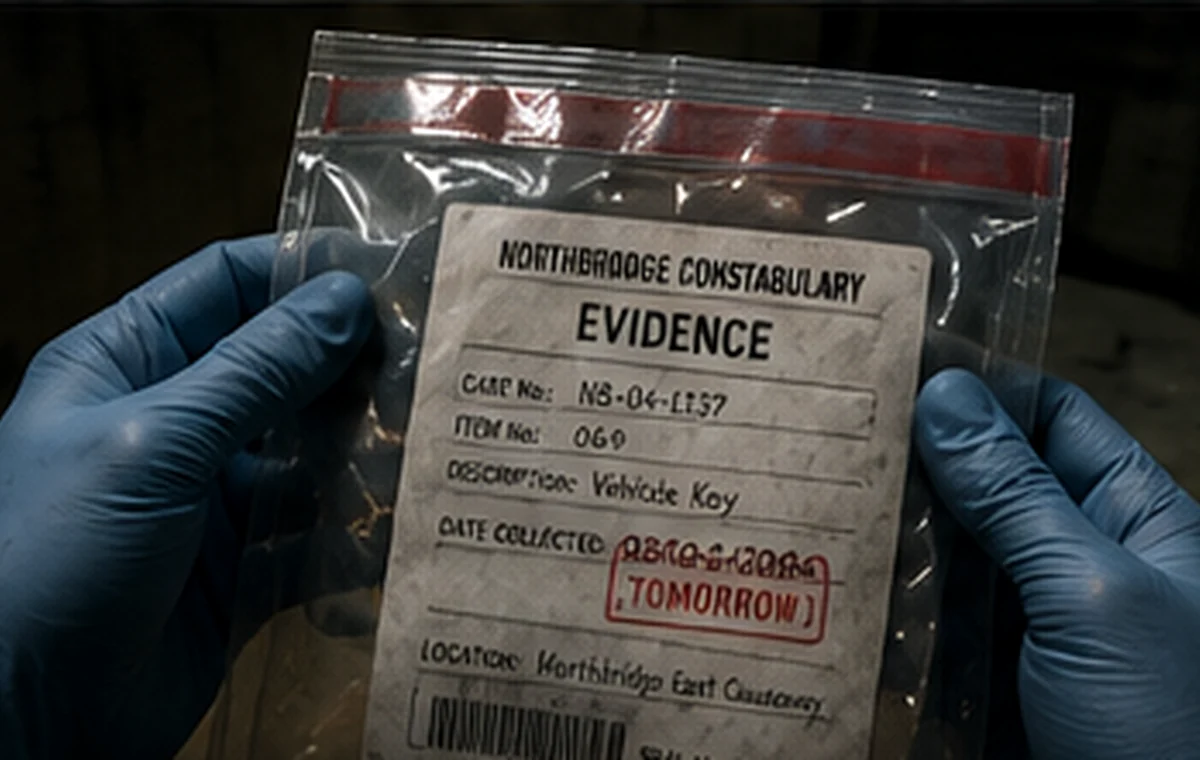
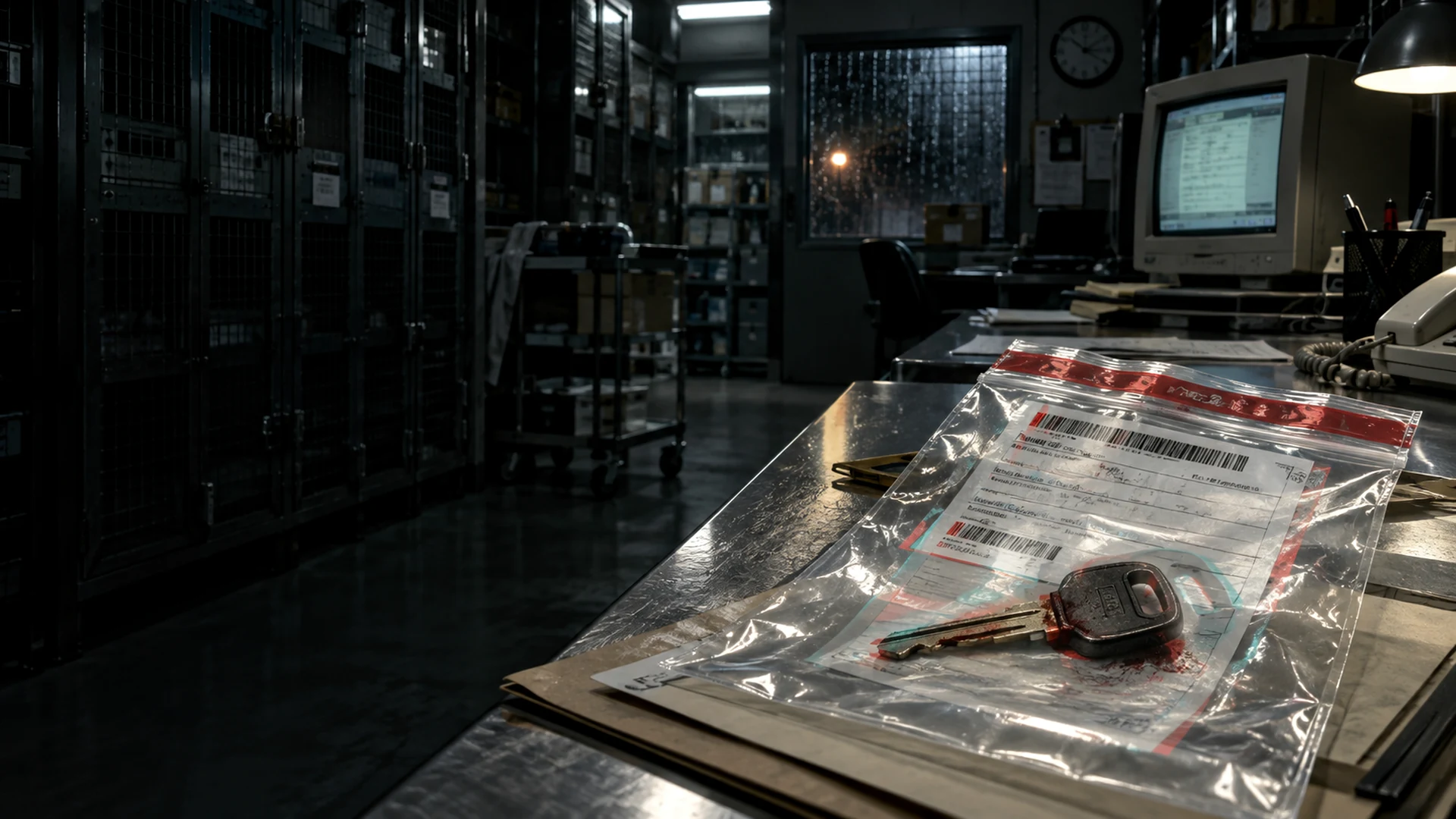
Collected: Tomorrow Status: Not yet evidence Continuity: Impossible
The label can change. The photograph may not.
01
RECEIVE
Accept ordinary police exhibits—then discover the package that should not exist.
02
PROCESS
Check seals, scan barcodes, weigh, photograph, label and store every object.
03
INVESTIGATE
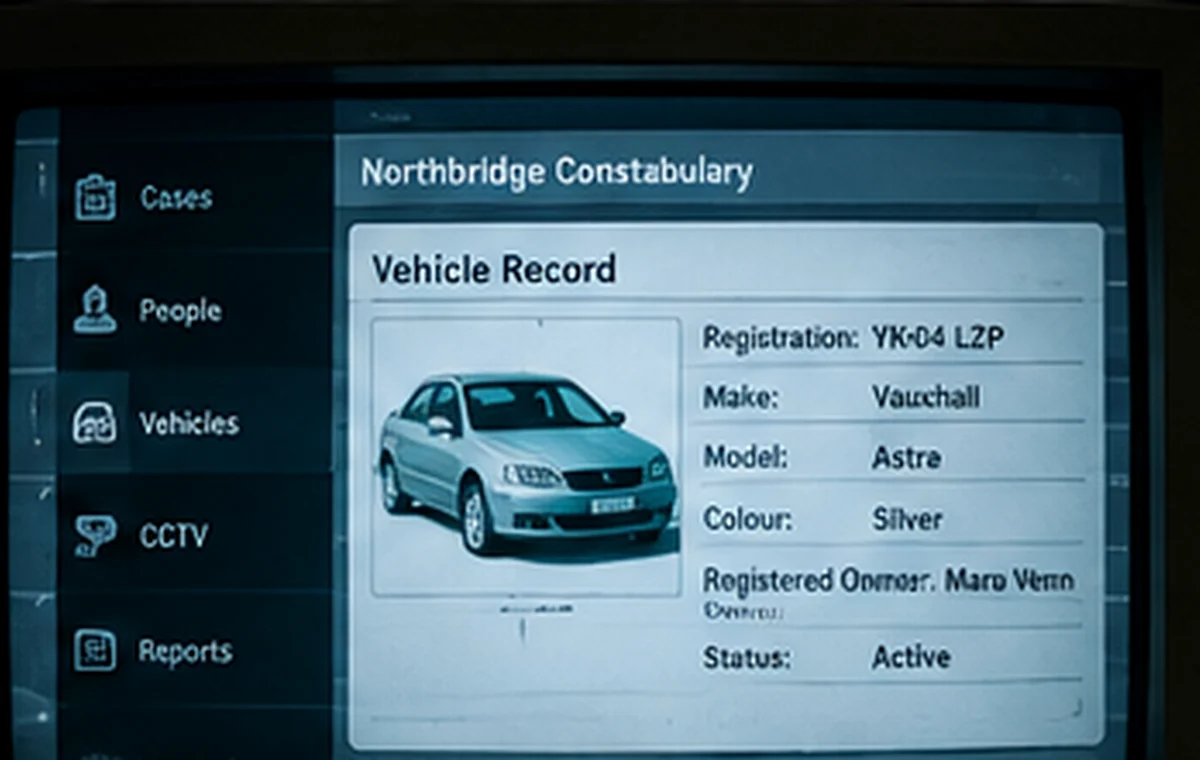
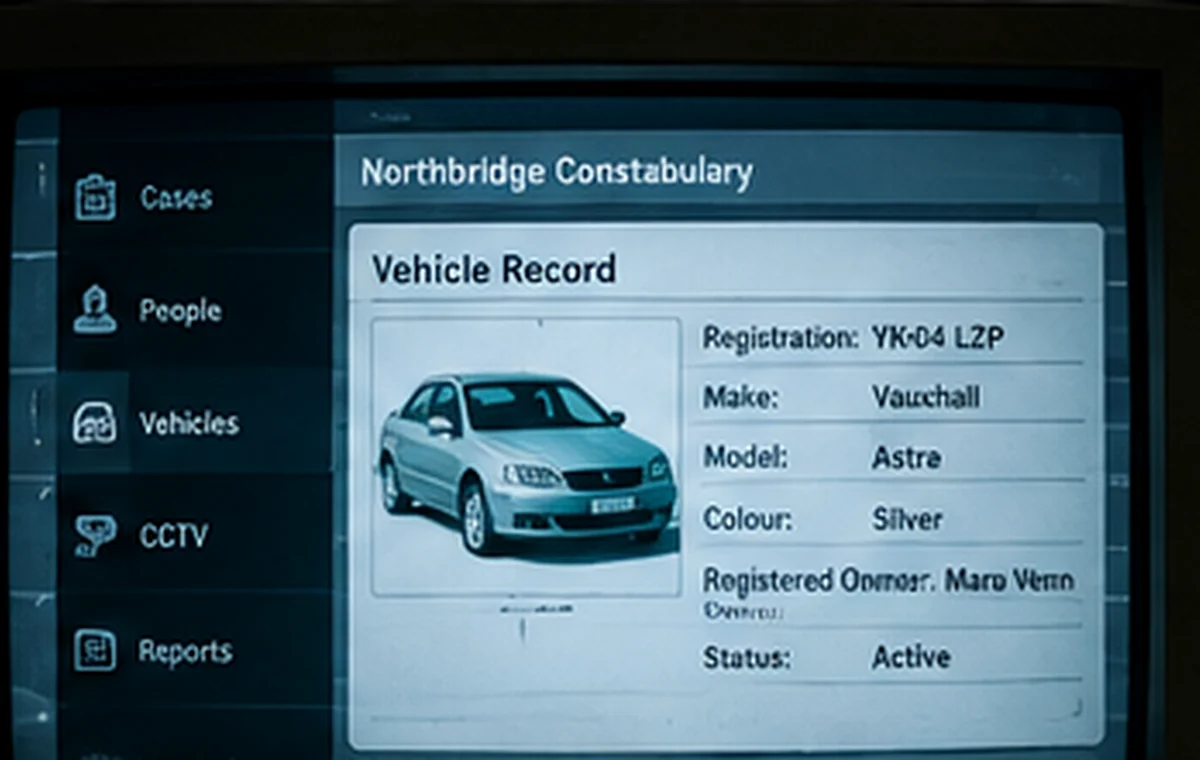
Search cases, people, vehicles, CCTV, calls and records for tomorrow’s crime.
04
INTERVENE
Warn someone, conceal the object, alter the chain or send something forward.
INSIDE THE ANNEX
One room. Several versions of tomorrow.
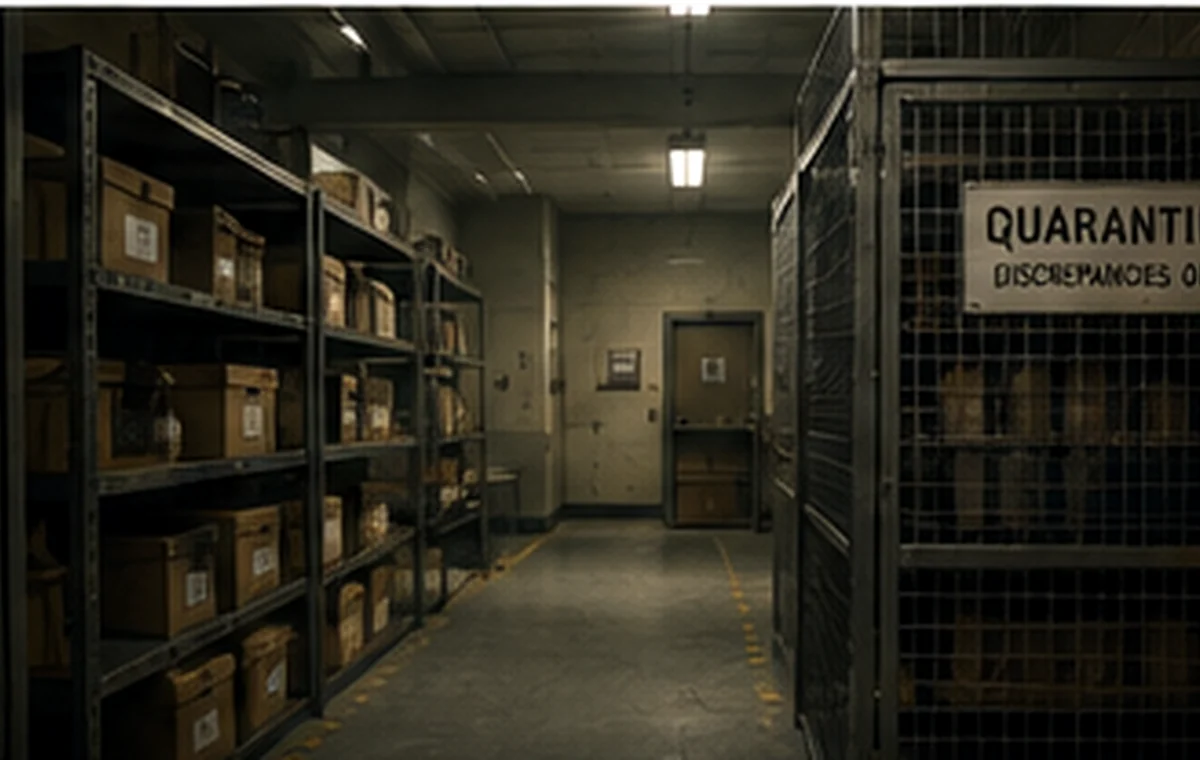
Every surface, record and object can become part of the investigation. The gallery below is built from separate image, heading and text widgets.
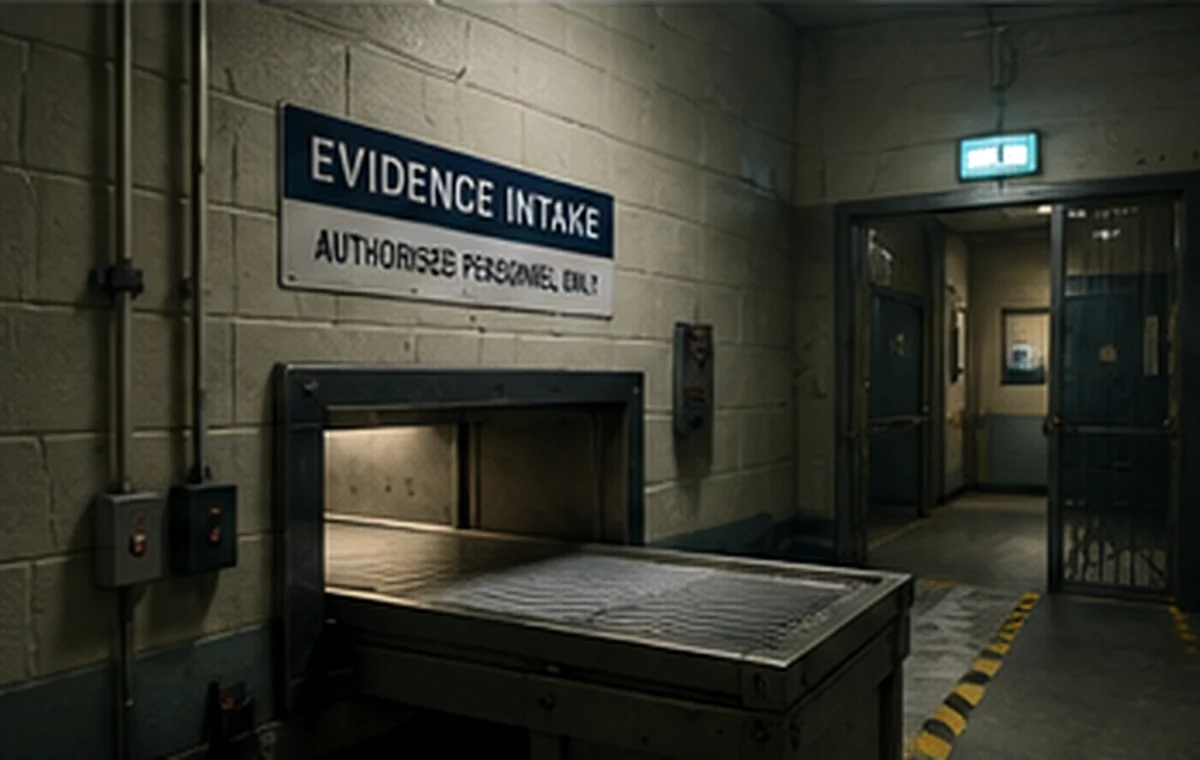
Evidence Intake
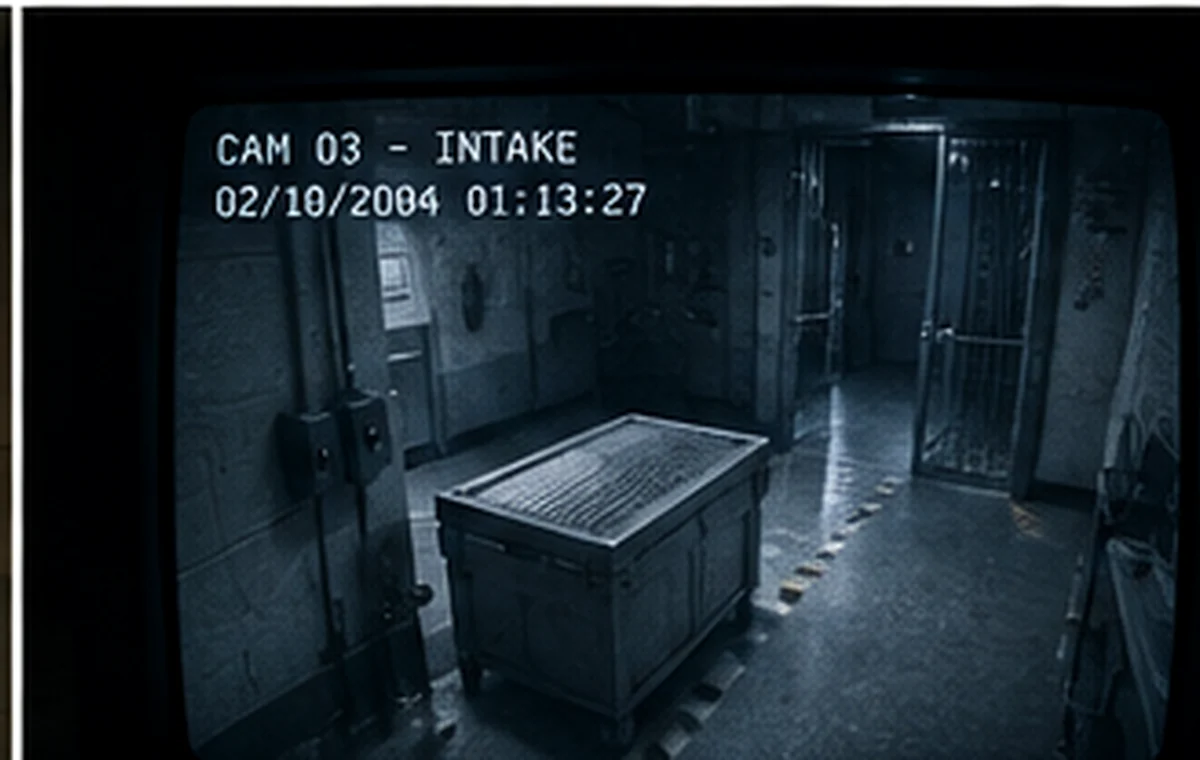
The secure drawer opens after hours.
Inspect
Read seals, dates, damage and details.
Investigate
Connect records that should not yet exist.
Review
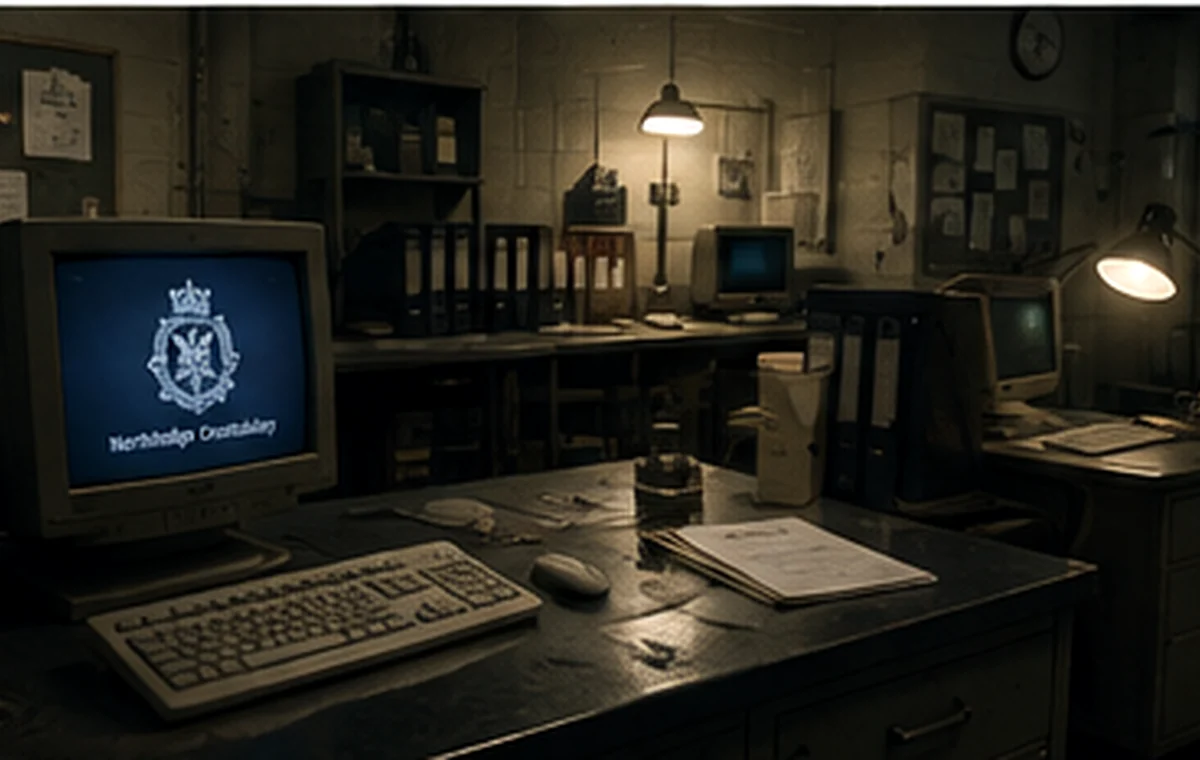
Compare the room with what the cameras remember.
After Hours
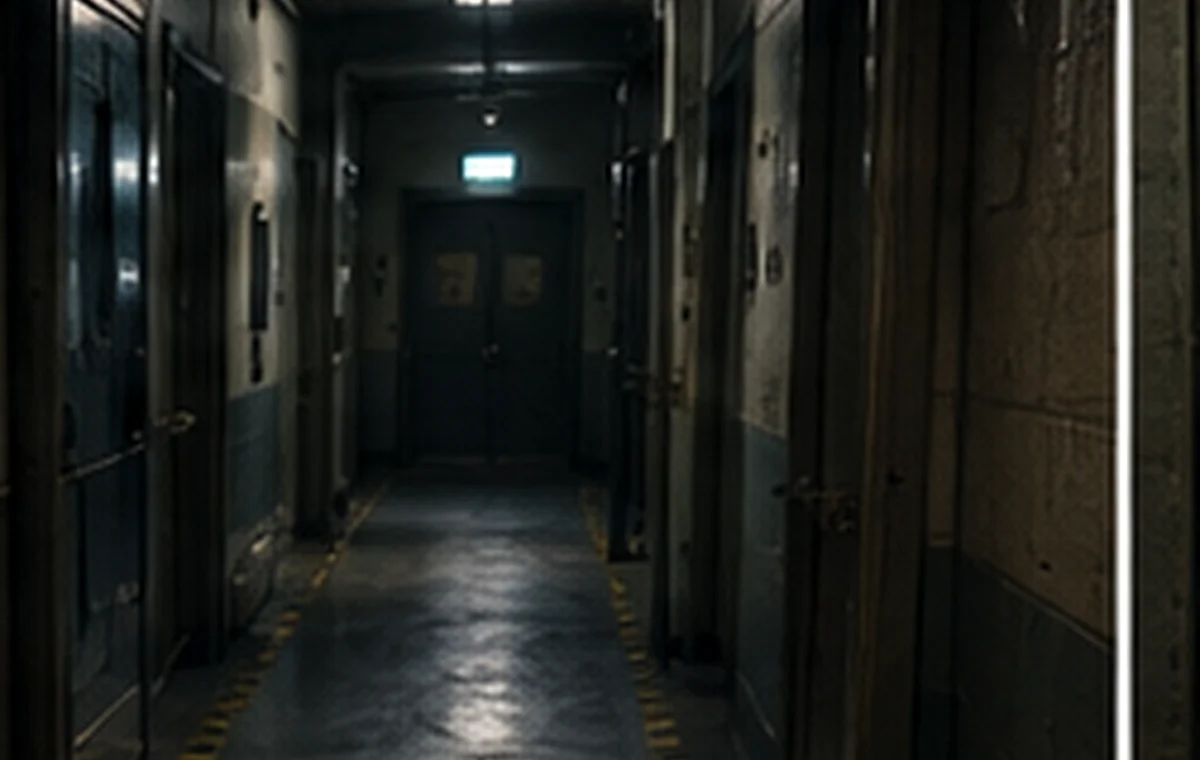
One location becomes less familiar every night.
PROPERTY OF TOMORROW · IN DEVELOPMENT
An ordinary job. An impossible delivery.
Property of Tomorrow is a first-person investigative thriller set inside a grounded British police property and evidence annex.
Most of the shift is procedure: check the seal, match the case, record the weight, photograph the exhibit and place it into secure storage. Then something arrives with a collection date that has not happened yet.
Every intervention changes the future that produced the item. The object, label, records and people around you can change—but some photographs, notes and memories may survive.
The game is designed around one detailed location, tactile evidence work and decisions that visibly alter later shifts.
01 / PROCESS
Handle evidence, not abstract menu icons.
Inspect seals, compare identifiers, scan barcodes, weigh packages, take continuity photographs and choose the correct storage zone. The work should feel physical, methodical and believable.
02 / INVESTIGATE
Build a case that does not officially exist.
Search people, vehicles, incidents, access logs and CCTV. A future exhibit might identify a victim who is currently alive, an officer who is not working or a location that has not yet become a crime scene.
03 / INTERVENE
Change the object. Change the crime.
Warn someone, conceal a package, substitute an item or send something forward. Blood can disappear, labels can rewrite themselves and the next shift can remember a different version of events.
04 / REMEMBER
Decide which version of the record you trust.
The current evidence may contradict an earlier photograph. CCTV may show actions you do not remember. Handwritten notes can preserve facts that the database has erased.
SYSTEMS
Built around evidence, records and causality.
Inspect Every Detail
Rotate evidence, examine tamper seals, read labels and find discrepancies.
Preserve Continuity
Every scan, movement, access and omission becomes part of the chain of custody.
Photograph the Timeline
Capture versions of evidence before your decisions cause them to change.
Search the Records
Use case, person and vehicle databases to connect tomorrow to tonight.
Review CCTV
Compare official footage with the physical room and your own memory.
Create Consequences
No good-or-evil meter—outcomes emerge from what you physically do.
THE RECORD IS NOT THE TRUTH
The label changed. The photograph did not.
Tomorrow can rewrite the annex, its records and the people connected to the case. Your problem is deciding what deserves to survive the change.
DEVELOPMENT
Latest from the evidence annex.
These cards are individual native containers, so the images, labels, headings, text and buttons can all be changed independently.
World building
Building a believable evidence annex
Research is focused on British public-sector interiors, evidence workflows, early-2000s equipment and the small details that make the job feel authentic.
It is an atmospheric psychological thriller rather than a combat-focused horror game. Tension comes from impossible evidence, changing records and the consequences of intervention.
Yes. Actions such as reporting, concealing, warning, substituting or sending an object forward can alter evidence, records, later shifts and the final outcome.



 Forgiven Games