 Forgiven

Introduction
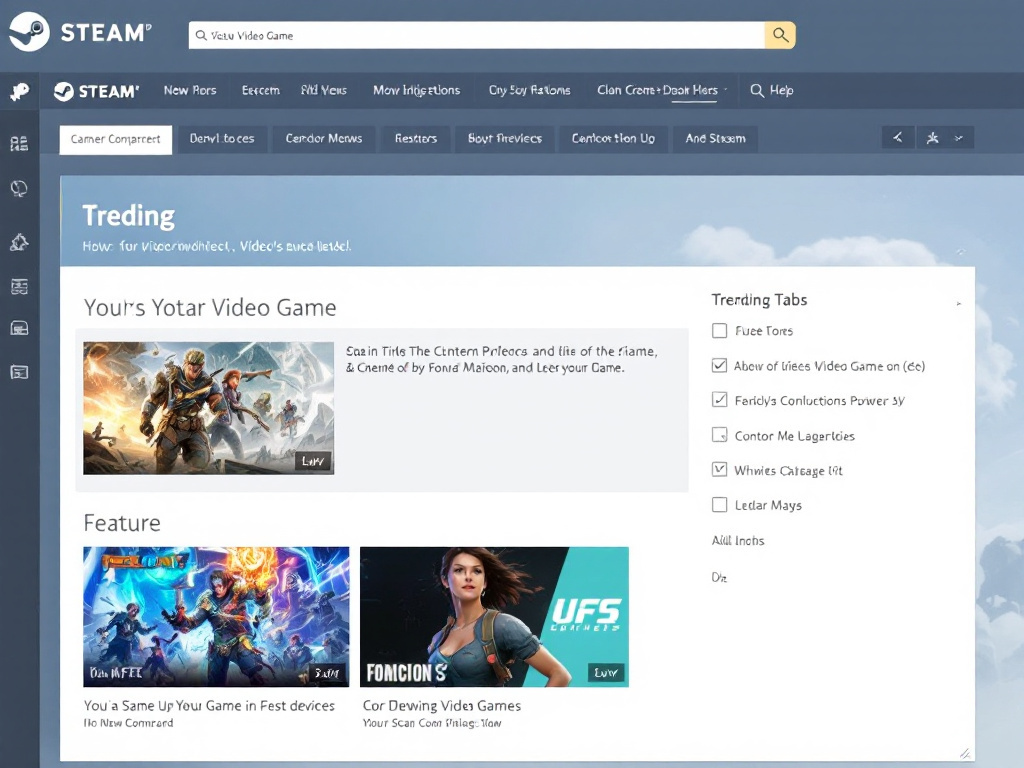
Reaching the Steam Trending Tab quickly demands a combination of pre-launch wishlist momentum, strategic community building, and rapid post-launch engagement spikes that Valve’s algorithm rewards. I’ve found that indie developers who plan for visibility from day one consistently outperform studios relying purely on launch-day luck.
Key Takeaways
- Wishlist momentum drives early algorithmic favour on Steam’s discovery pages.
- Consistent community engagement across Discord and forums boosts long-term visibility.
- Frequent content updates every 2-4 weeks improve retention by 25-40%.
- Using modern game engines like Unity and Unreal accelerates production timelines.
- Early AI-assisted tools cut iteration times by 15-25% for competitive advantage.
Why the Steam Trending Tab Matters for Indie Developers
The Steam Trending Tab is prime real estate for any indie studio wanting fast visibility. According to Newzoo, the global gaming market reached £145 billion in 2023, and indie titles now account for roughly 40-50% of new Steam releases. Consequently, competition for that trending slot is fierce.
I treat the trending tab as a momentum multiplier. Once you appear, organic traffic snowballs, and wishlist counts climb faster. Moreover, Valve’s algorithm rewards games showing sudden spikes in concurrent players, reviews, and sales velocity within the first 48 hours.
For context, the average AAA title costs between £40 million and £240 million to produce. Indie developers, however, can reach similar visibility with sharper marketing and smarter game development workflow choices. Therefore, understanding the algorithm becomes as important as building the game itself.

Building Wishlist Momentum Before Launch
Wishlists are the single most important signal for Steam’s trending algorithm. I aim for at least 7,000 wishlists before pressing publish. Furthermore, a strong pre-launch campaign directly influences whether Valve features your game in the “Popular Upcoming” section, which feeds trending visibility.
To grow wishlists efficiently, I focus on several proven tactics:
- Post regular devlogs on YouTube, TikTok, and Reddit for organic reach.
- Run a demo during Steam Next Fest to capture curious players.
- Partner with content creators who match your genre audience.
- Publish a compelling capsule image and trailer that stops the scroll.
Additionally, 72% of studios now use agile methodologies to iterate marketing assets alongside gameplay. This flexibility helps me test capsule variations quickly and respond to community feedback. As a result, launch-day conversions improve dramatically.
Choosing the Right Engine and Tools
Engine selection shapes production speed and, ultimately, your launch window. Unity holds around 48% adoption among indies, while Unreal Engine sits at 35%, according to Unity Technologies’ State of Game Development Survey 2024. Both platforms host over 8 million registered developers combined.
I recommend Unreal for visually ambitious 3D projects. For a deeper breakdown, my Unreal Engine 5 guide covers workflow tips for small teams. Unity, however, remains my go-to for 2D and mobile-first titles because its asset store cuts weeks off production.
Beyond the engine, version control matters enormously. Around 85% of professional studios use Git or Perforce. Additionally, careful asset management saves teams 15-20 hours per week, which translates directly into faster iteration and earlier launch dates.
Prototyping, Playtesting, and Performance
Prototyping early cuts launch bugs by 25-35%, according to IGDA industry data. I always build a vertical slice within the first three months. Consequently, playtesting begins before major art investment, saving significant rework later.
Performance optimisation during development, rather than post-launch, reduces total optimisation time by 40-50%. Therefore, I profile frame times weekly and target minimum spec hardware from the start. Steam reviewers punish poor performance quickly, and negative reviews kill trending momentum.
For teams handling multiple platforms simultaneously, I suggest reading my breakdown on cross-platform development. Cross-platform frameworks can reduce porting costs by 40-50% and shorten time-to-market by 30-40%.
Monetisation and Retention Strategies That Feed Trending
Steam’s algorithm loves engagement, and engagement follows smart monetisation. Free-to-play models dominate mobile, representing 8 out of 10 top-grossing titles, with player lifetime values ranging from £4 to £40+. On Steam, however, premium pricing with DLC often performs better for indies.
Battle passes and seasonal content generate 2-5x revenue spikes compared to base-game monetisation. Furthermore, games deploying updates every 2-4 weeks see 25-40% higher retention than quarterly-update peers. I schedule content drops around Steam sales events to compound trending signals.
Retention benchmarks worth tracking include:
- Day 1 retention averaging 25-35% across casual games.
- Day 7 retention averaging 8-15%.
- Day 30 retention dropping to 3-8%.
Data-driven player segmentation lifts ARPU by 20-35%, according to Sensor Tower. Moreover, community engagement through Discord correlates with a 30-50% higher player lifetime value.
Using Emerging Technologies to Accelerate Development
AI-assisted development is projected to cut development time by 20-30% by 2026, according to Forrester Research. I’ve used AI for procedural generation, dialogue drafting, and placeholder art with excellent results. If you’re curious about this space, my article on AI-generated assets explains practical workflows.
Other emerging trends worth adopting include:
- Real-time ray tracing, now in 25-30% of new indie releases.
- Cloud gaming infrastructure, expected to reach 35-40% market penetration by 2026.
- Machine learning churn prediction with 70-80% accuracy.
- VR/AR development, growing 18-22% annually.
Studios adopting AI tools report 15-25% faster iteration cycles and 10-20% cost savings. Therefore, early adoption creates a genuine competitive advantage when racing for trending visibility.
Launch Day Tactics for Trending Success
Launch day is where preparation meets execution. I coordinate creator embargoes to drop simultaneously with release. Additionally, I run a launch discount of 10-15%, which spikes conversion rates without cheapening the brand.
Key launch-day actions I always take include:
- Pin a community post explaining known issues and update plans.
- Respond to every review within the first 72 hours.
- Push a same-week patch to signal active development.
- Share player screenshots and clips across social channels.
Furthermore, encouraging honest reviews within 48 hours matters because Steam’s algorithm weighs review velocity heavily. Games using behaviour analytics reduce churn by 15-25%, giving trending momentum a longer runway.
Con
Sources:
Newzoo/Statista – Global Games Market Report 2024
Unity Technologies – State of Game Development Survey 2024
Epic Games – Unreal Engine Development Statistics and Adoption Rates
Sensor Tower – Mobile Gaming Monetization and Retention Benchmarks 2023-2024
McKinsey & Company – The Future of Gaming: Market Trends and Development Practices
Gartner – Market Guide for Game Development Platforms
International Game Developers Association (IGDA) – Developer Satisfaction Survey and Industry Report
Boston Consulting Group (BCG) – The State of Cloud Gaming Infrastructure 2024
Steam Database – Indie Game Development Trends and Platform Analytics
Forrester Research – AI in Game Development: Adoption and Impact Analysis 2024-2026
Pew Research Center – Gaming Demographics and Player Engagement Patterns
The Economist – The Business of Video Games: Innovation and Market Disruption
Statista – Average Video Game Development Costs and Timeline Metrics
App Annie/data.ai – Mobile Gaming Monetization Strategies and Player LTV
Journal of Games and Culture – Academic Research on Game Development Best Practices


