Forgiven

Introduction
Game development in 2026 demands a sharper toolkit than ever before, with AI-assisted engines, cloud collaboration platforms, and real-time analytics now forming the backbone of successful studios. I’ve put together this guide to the essential game dev tools that’ll help you ship faster, iterate smarter, and compete in an increasingly crowded marketplace.
Key Takeaways
- Game engines like Unreal 5.5 and Unity 6 remain the foundation, but Godot’s open-source growth is reshaping indie workflows.
- AI tools for asset creation, code assistance, and QA testing can cut production time by up to 40%.
- Version control through Perforce or Git LFS is non-negotiable for teams of any size in 2026.
- Analytics platforms such as GameAnalytics and Unity Analytics help you understand player behaviour and improve retention.
- Marketing tools matter as much as dev tools, especially for Steam visibility and wishlist conversion.
Game Engines Leading the Charge in 2026
The engine you pick shapes everything, from your rendering pipeline to your hiring strategy. In 2026, three engines dominate the conversation, each with distinct strengths. I’ve worked across all of them, so here’s my honest breakdown of where each one shines.
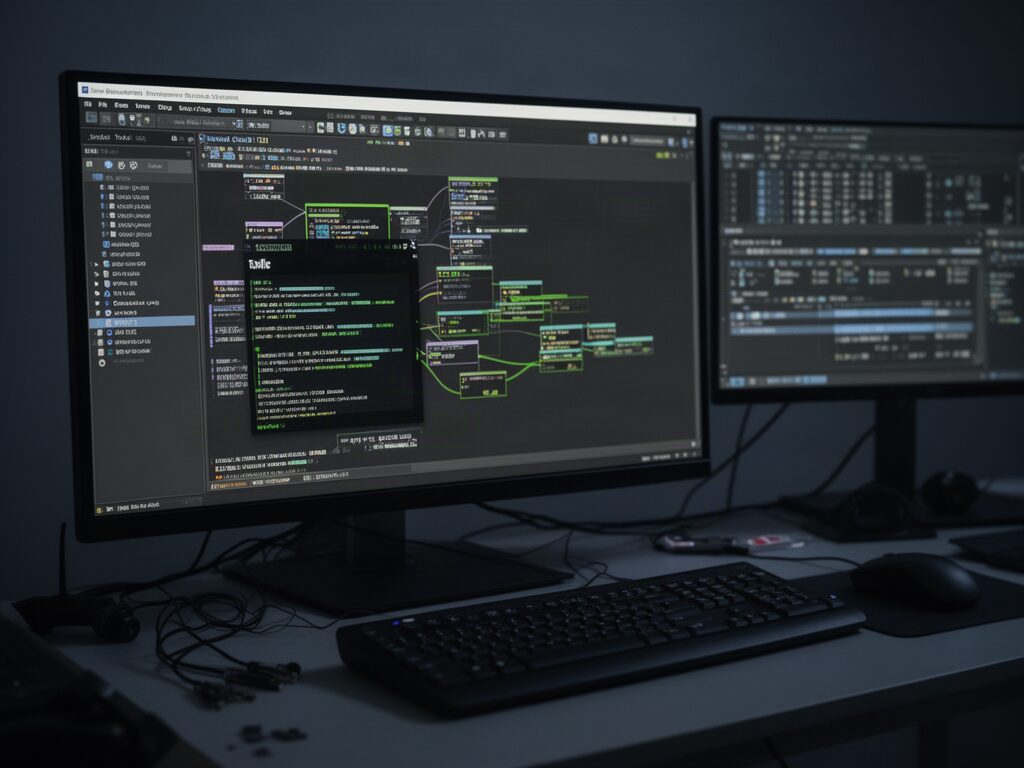
Unreal Engine 5.5 continues to set the visual benchmark. Nanite and Lumen have matured, and the new MegaLights system handles thousands of dynamic lights without tanking performance. However, the learning curve stays steep, so smaller teams often struggle with its scope.
Unity 6 has clawed back trust after the 2023 pricing fiasco. The revised runtime fees are gone, and the new GPU Resident Drawer boosts rendering speed considerably. For mobile and mid-tier PC titles, Unity remains my first recommendation.
Godot 4.4 is the real surprise story. It’s free, open-source, and increasingly capable for 2D and smaller 3D projects. Furthermore, its community has exploded, meaning tutorials and plugins are plentiful.
AI-Powered Development Tools
AI integration has shifted from gimmick to genuine productivity multiplier. I use these tools daily, and they’ve changed how I approach prototyping and asset creation.
Here are the AI tools I’d recommend testing this year:
- GitHub Copilot and Cursor for intelligent code completion across C#, C++, and GDScript.
- Scenario and Layer AI for generating consistent 2D sprite sheets and concept art.
- Convai for building NPC dialogue systems with natural language understanding.
- modl.ai for automated QA testing that catches bugs human testers miss.
- ElevenLabs for voice synthesis, particularly useful for prototype dialogue.
A word of caution, though. AI-generated assets can create licensing headaches on Steam and console storefronts. Therefore, always check the terms of service and disclose AI use where required.
Version Control and Collaboration
If you’re working in a team, version control isn’t optional. I’ve seen too many indie projects collapse because someone overwrote the lead designer’s work. For 2026, you’ve got solid options at every budget.
Perforce Helix Core remains the industry standard for larger teams handling big binary files. It’s free for up to five users, which suits most indie studios. Moreover, it handles Unreal projects beautifully.
Git with LFS works brilliantly for smaller teams and code-heavy projects. GitHub, GitLab, and Azure DevOps all offer competitive free tiers. Additionally, Plastic SCM (now Unity Version Control) has matured into a strong alternative, especially if you’re already in the Unity ecosystem.
For project management, Jira still dominates professional studios, while Trello and Notion suit smaller teams. I personally use Linear for its speed and clean interface.
Analytics, Testing, and Live Operations
Shipping a game is just the start. To grow a title in 2026, you need data on how players actually behave. Consequently, analytics tools have become as important as the engine itself.
GameAnalytics offers a generous free tier and integrates with Unity, Unreal, and custom engines. Unity Analytics and Unreal Insights provide deep profiling for performance-critical work. For deeper funnel analysis, deltaDNA and Amplitude are worth the subscription cost, typically starting around £150 per month.
Testing tools have evolved too. Automated QA platforms like GameDriver and modl:test run thousands of play sessions overnight. Furthermore, services like PlaytestCloud give you real player feedback within 24 hours, usually from £400 per round.
Marketing and Launch Tools
Great tools don’t matter if nobody plays your game. Steam remains the dominant PC storefront, so understanding its mechanics is critical. I’d recommend reading up on how the Steam algorithm works before you even plan your capsule art.
For wishlist tracking and store page optimisation, Steamworks itself provides solid data, but third-party tools like Gamalytic and VG Insights offer competitor analysis. Understanding Steam ranking factors helps you time your announcements and sales properly.
My recommended marketing stack includes:
- Keymailer and Woovit for distributing review keys to streamers and press.
- Buffer or Hootsuite for scheduling social media across platforms.
- Canva Pro at roughly £110 per year for quick marketing graphics.
- Mailchimp for building a newsletter audience before launch.
- OBS Studio for creating trailers and devlog content, completely free.
Pay attention to the signals Steam tracks, including wishlist velocity, review scores, and session length. These metrics directly influence how often your game appears in discovery queues.
Conclusion
The game dev toolkit in 2026 is more powerful and more accessible than at any point in the industry’s history. Whether you’re a solo developer with £0 to spend or running a studio with proper budgets, there’s a stack that’ll work for you. My advice is simple: pick tools that match your project’s scope, not your ambitions. Start lean, add complexity only when you need it, and always prioritise shipping over polish. The best tool is the one that gets your game into players’ hands.
Sources: